| Played: | 15 times |
| Classification: | Dle Games |
RNGdle gives you a random number and a set of clues to figure out just how unusual it is. Each roll can contain up to six digits, but shorter numbers are possible too. The interesting part comes after the number appears: RNGdle checks its digits for patterns, mathematical properties, repeated sequences and even elements from the periodic table. All results merit XP, but the more rare combos get a higher score. You continue to roll until you hit a Mythic number (top 1%).
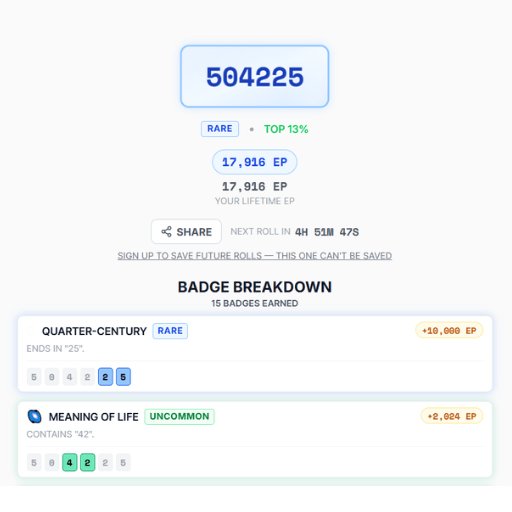
Start by generating a number and looking at all the details attached to it. RNGdle examines things such as repeated digits, consecutive numbers, matching pairs, divisibility and patterns like three of a kind. A number that looks ordinary at first might contain something worth a surprising amount of XP. For example, 404 can count as a special pattern, while 0123 can earn points for its consecutive sequence.
Each number receives an XP reward and a rarity rating, ranging from ordinary results to much harder finds such as Rare, Epic and Mythic. It'll rank your result, indicating where it stood in relation to other possibilities (top vs. bottom percentiles, etc.). Quirky results can also unlock special badges or achievements, so consider each digit carefully before moving on.
Do not judge a roll just by how it looks. Check its mathematical properties, repeated sequences and hidden patterns. A number can be divisible by the sum of its digits, contain a recognizable sequence or match a special combination without looking particularly impressive.
RNGdle can reward combinations that are easy to overlook. A number containing 007, for example, can be much better than its appearance suggests. Take a moment to check the full breakdown before deciding whether to move on. Even a roll with fewer than six digits can turn out to be worth keeping.
The goal is to generate numbers, collect XP and find increasingly rare results. The biggest challenge is landing a Mythic number in the top 1%.
The rarity of a number is based on the patterns and properties of its digits. Repeated numbers, special sequences, mathematical relationships, and other quirky combinations can make it valuable.
Yes. Some rolls contain fewer than six digits, making them unusual results worth checking rather than automatically skipping.